The Riversdale
Creating a vertical neighbourhood within a rapidly urbanising city
Good design navigates the tension between offering high density living to a city and enhancing its character and identity.
This is the impetus behind ‘The Riversdale by Mosaic,’ a 39-storey residential building situated on the Kurilpa reach of the Brisbane River.
Designed by Brisbane-based architects bureau^proberts and realised with Mosaic Property Group, the project creates a nexus between landscape, community, and artistry to shape a building that responds to Brisbane’s rapidly increasing population. The Brisbane City Council estimate 210,800 homes need to be built over the next 20 years to respond to the city’s fast-growing population, with around 600 people moving to Brisbane each week.
This need is the catalyst behind The Riversdale, a striking building, and ‘vertical neighbourhood’, situated on the edge of the Brisbane River.
The firm’s Creative Director, Liam Proberts, says The Riversdale is the culmination of three key drivers – designing a building that is emblematic of its area; creating a sense of community in a high-density apartment building; and reflecting the subtropical identity of the surrounding landscape in the building’s form.
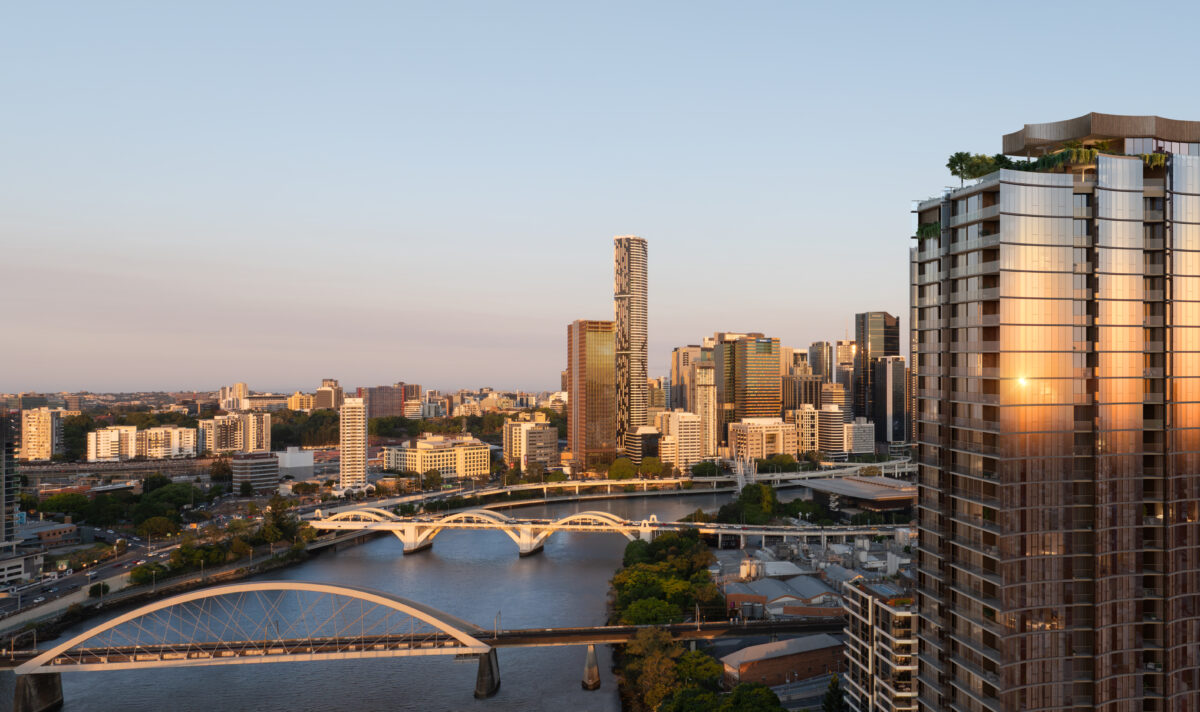
Reflective of place
“It’s right at that intersection between the cultural part of the Kurilpa reach and what is going to be the new living destination in Brisbane on that long stretch of river,” Mr. Proberts said.
“We thought it was emblematic of how that reach could evolve.”
The Kurilpa reach has historically been dominated by large industrial blocks of land that have serviced the city in its industrialisation over the last century.
Mr. Proberts said using such Brownfield sites for development is appropriate for Brisbane, especially when the inner city is low on greenspace.
“This allows us to provide density while maintaining the greenspaces we have.”
It’s a strategic turn for Brisbane’s development, which allows the city to respond to the character of its subtropical climate and river-focused planning, yet grow with urban demands.
Creating home
When asked what a ‘vertical neighbourhood’ means to Bureau Proberts, Mr Proberts said it’s about responding to human needs.
“We’re trying to create a really liveable place that feels like home.”
“We do this by not only creating very inviting living quarters, but by creating quality third spaces… that space between public and private that is shared, but protected.”
The apartments are thoughtfully designed and well planned to provide practicality, whilst imbuing a sense of luxury and comfort.
Kelly Geldard, Senior Partner at bureau^proberts, notes that prioritising generous amenity spaces has been central to The Riversdale’s design, to shape an environment that supports community formation.
“Rather than being treated as secondary spaces, the shared amenities are integral to the design approach… conceived as extensions of the residential experience, crafted to encourage interaction and connection,” she said.
The amenity offering is curated, with a diversity of outdoor and communal spaces providing residents with choice and flexibility beyond their private apartments.
These spaces – like its lap pool, gym, wellness facility, golf simulator, or business lounge – are designed to accommodate gathering, wellness and retreat, and respond to different moments of the day.
Through considered spatial arrangement, materiality, and scale, the amenities foster a sense of luxury and belonging, allowing residents to feel at home within a shared setting.
Every aspect of the built form has been thoughtfully calibrated to reinforce this sense of belonging. From the articulation of the architecture to the relationship between inside and out, the design establishes a strong association between dwelling and community.
“The Riversdale is experienced not simply as a collection of residences, but as a cohesive and connected place to live,” Ms Geldard said.
“At Riversdale, the front door and foyer are conceived as integral to the building’s identity, rather than a threshold to pass through.”
Positioned on the river’s edge, the foyer is deeply connected to its setting, underneath the fig trees and shaped to draw the character of the river and adjacent parkland into the building itself.
The spatial and material language invites the landscape inside, blurring the boundary between outside and inside.
“It’s about welcoming people as you would into your own home, that moment of arrival is formative and it sets the tone for the building and anchors the dweller’s sense of belonging.”
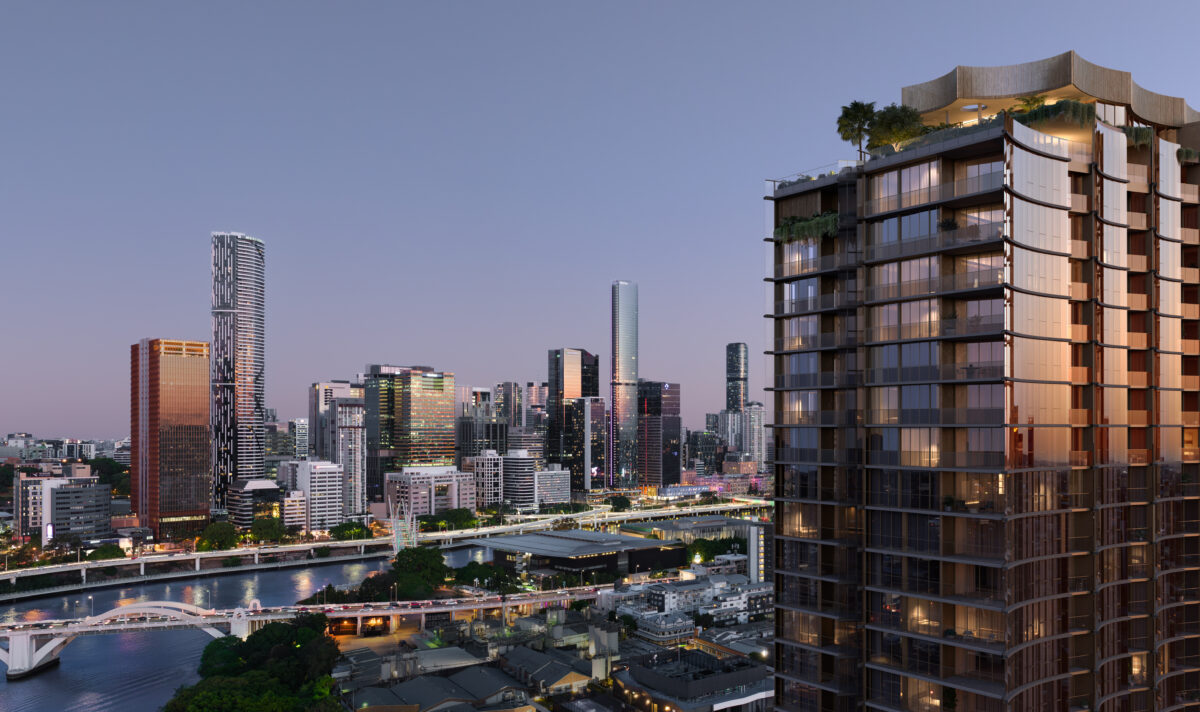
Fluid in form
Another crucial element in creating a sense of belonging is using natural landscape to inform the building’s structure.
Andrew Bell, Partner at Bureau Proberts says the building’s form is fluid, shaped by the river and its landscape, opening to its views and aspect.
“To develop the character of our city we need to find ways to connect to the landscape, aspect and climate… and let that influence the character of the building,” he said.
“By doing that, Brisbane will evolve its own built character.”
The building’s articulation does this this in subtle, intentional ways.
“By sculpting the building and we were able to open the leaves of the façade, bringing light and ventilation to the building in a way that also connects residents to the landscape and the river.”
The mirrored glass façade literally reflects the image of the river, whilst rhythm of its curves embodies the water’s fluid form.
Mr Bell concluded with the reflection that connecting to landscape is an essential part of the experience of home.
The Riversdale responds to the demands of a rapidly evolving city with design that prioritises the needs of the people living within it.
Images: Render House Studios.