Ways of Living
The Similarities between London and Brisbane
Brisbane can learn lessons from London’s experience of urban planning successes and failures, according to Monika Laudencka-Sobik , Project Director and London Studio Lead at bureau^proberts.
Planning for growth, managing the legacy of the 2032 Olympics, developing cultural capital and engaging community expectations around increased urban density are some of the key learnings for Brisbane’s future.
Presenting her paper ‘Ways of Living’ at the recent Queensland Environmental Law Association (QELA) International Conference in the United Kingdom, she reflected on the similarities between the environmental, urban, and legal contexts of London and Brisbane.
Two great river cities
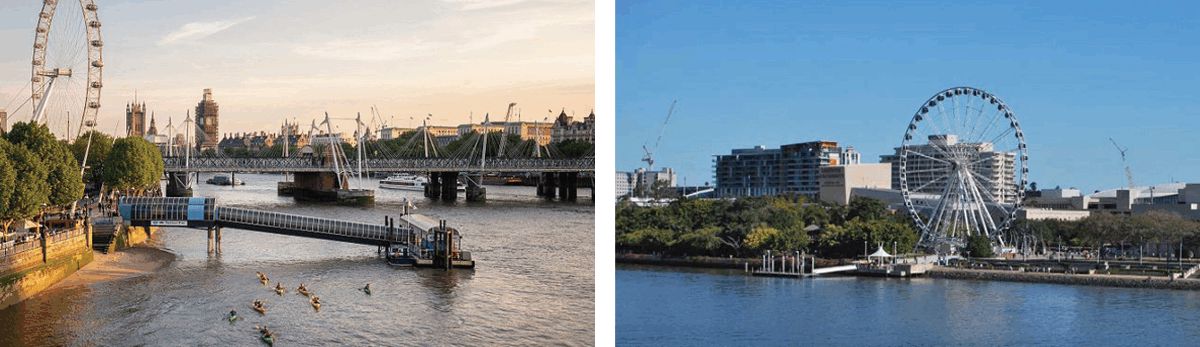
Both cities are dominated by central rivers, which are bordered by significant cultural, commercial, and social assets, including cultural precincts, heritage sites, business districts, and leisure attractions such as arts centres, Ferris wheels, and parklands.
“Reflecting on parallels between London and Brisbane as great cities, there are remarkable similarities,” she said. “Both cities operate under comparable legal and planning systems, and both have adopted similar approaches to creating public spaces that enhance the lives of their communities – fostering identity, celebrating heritage, and promoting public interaction.”
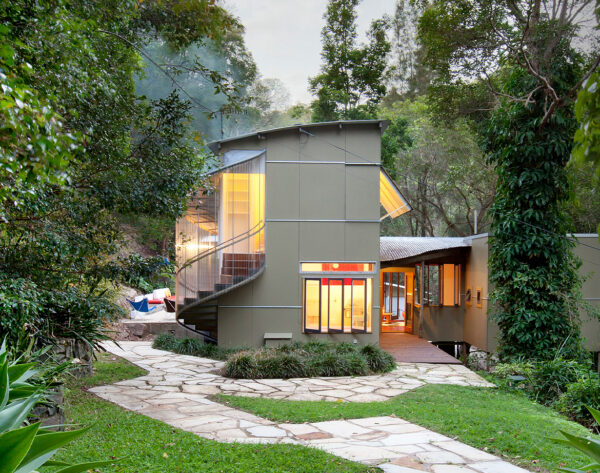
“In Brisbane, the sub-tropical climate and lifestyle foster sprawling, open, integrated spaces that extend daily life outdoors with shaded living verandahs,” she said. “London’s cooler climate calls for compact, insulated interiors, but people still crave outdoor spaces with balconies, small terraces, patches of grass and rear gardens.”
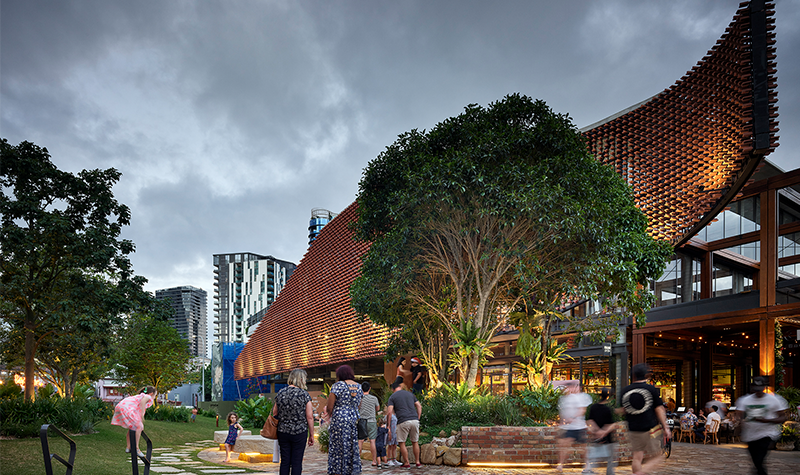
At bureau^proberts, we have contributed to the creation of successful public spaces in Brisbane, designing projects that serve diverse communities and address various local needs, such as The Eaves in West Village (pictured below) and the Newstead Green development.
“Great cities thrive when there is a shared sense of community and purpose, plus a sense of belonging,” she said. “Hosting international events such as the Olympics and adapting to rapid population growth in our cities pose important questions of how to provide quality of living and public spaces in increasingly dense urban spaces and more diverse societies.”
“In London, new districts like Wembley Park (redeveloped over the last 20 years and aiming to deliver over 8,000 homes) are leveraging sport and entertainment site heritage and public transport infrastructure to shape future living models” she said. “The rapid growth of our cities creates a challenge, with 9 million people now living in London, its population may hit 10 million residents within a decade.”
Southeast Queensland’s population is expected to grow from 3.8 million people today to over 6 million people in 2046. Such rapid growth leads to increased urbanisation and densification , creating ongoing challenges around housing affordability, cultural identity, effective governance and planning.
“As urbanists and architects, we think critically about how cities function – socially, economically, environmentally, and physically. This framework is central to our design process: creating thriving communities and great spaces for people.”
Designing a legacy
As a Queensland-based practice that works globally, bureau^proberts is committed to showing what Brisbane can achieve when it leads with design and creates new cultural capital.
Our design legacy success depends on creating high-quality public spaces that are connected to transport and community life. This involves embracing urban density and creating mixed-use precincts that continue to function and evolve, utilising inclusive design that reflects the diversity, environment, and culture of Queensland.
Cultural capital encompasses the material and symbolic elements that a society values. We explore how contemporary architecture contributes to the development of cultural capital within cities and places.
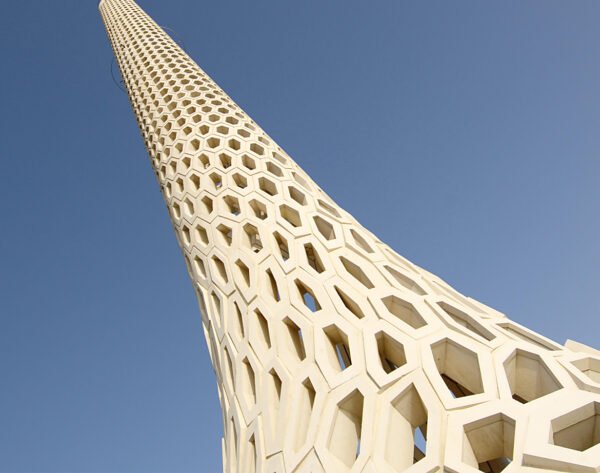
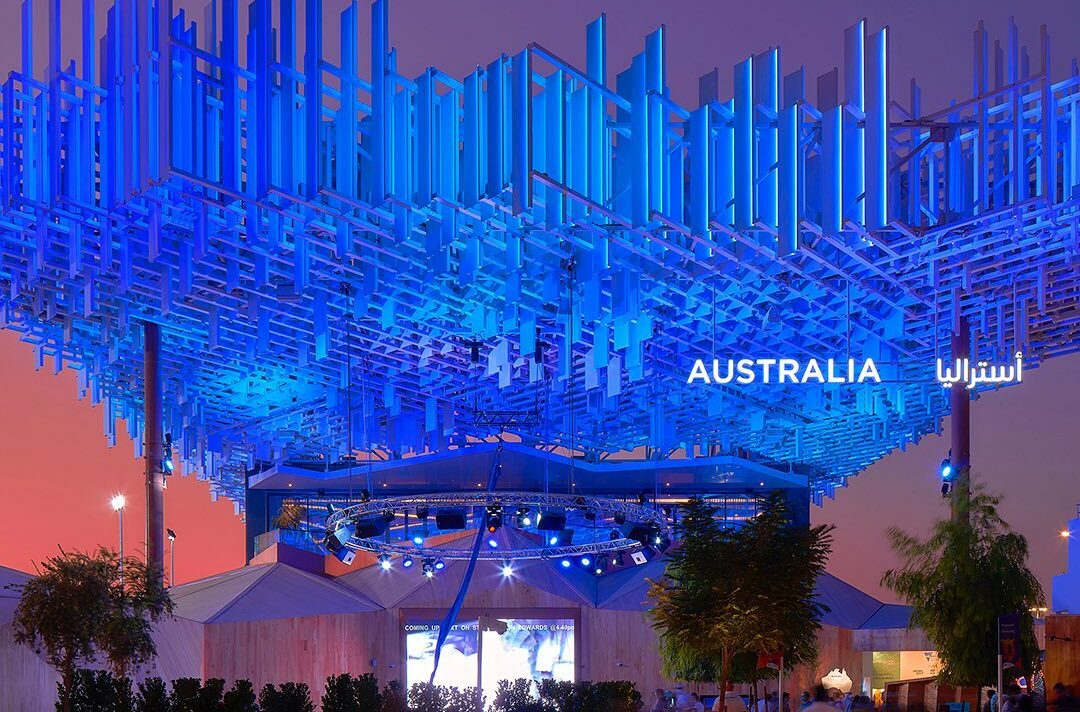
The bureau^proberts approach to cultural capital has underpinned the identity and success of transformational projects, including the Dubai Expo Pavilion in 2020 (pictured below) and the Wahat Al Karama monument and memorial in Abu Dhabi, both of which created places of international significance with close emotional connections to their communities.
Increasing density is a catalyst for positive change
The ongoing legislative and planning challenge is to encourage the acceptance of social change that accompanies increased density in our cities. Monika believes that this has clear community benefits, including improved public transportation networks, cultural capital, and economic opportunities, as our ways of living continue to evolve.
“The evolution of living in Brisbane has been driving urban regeneration and gentrification,” Monika said. “Over the past three decades, bureau^proberts has been part of that transformation and the shift from suburbia to city living, from the backyard dream into new vertical communities.”
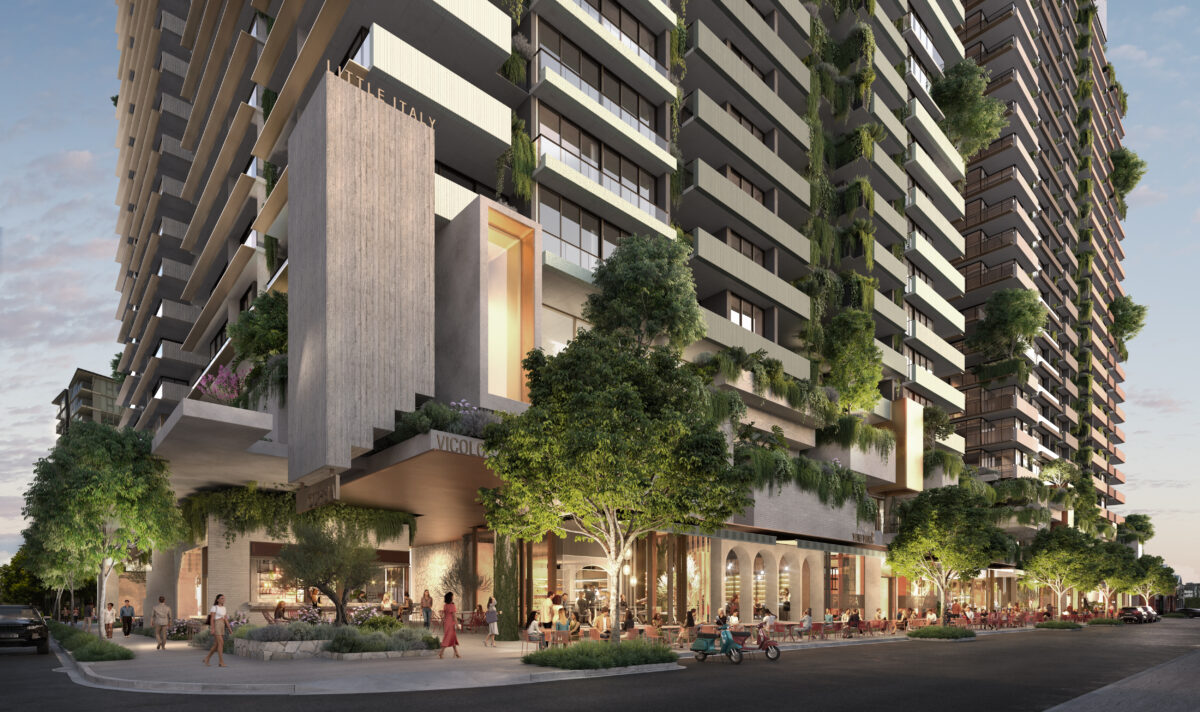
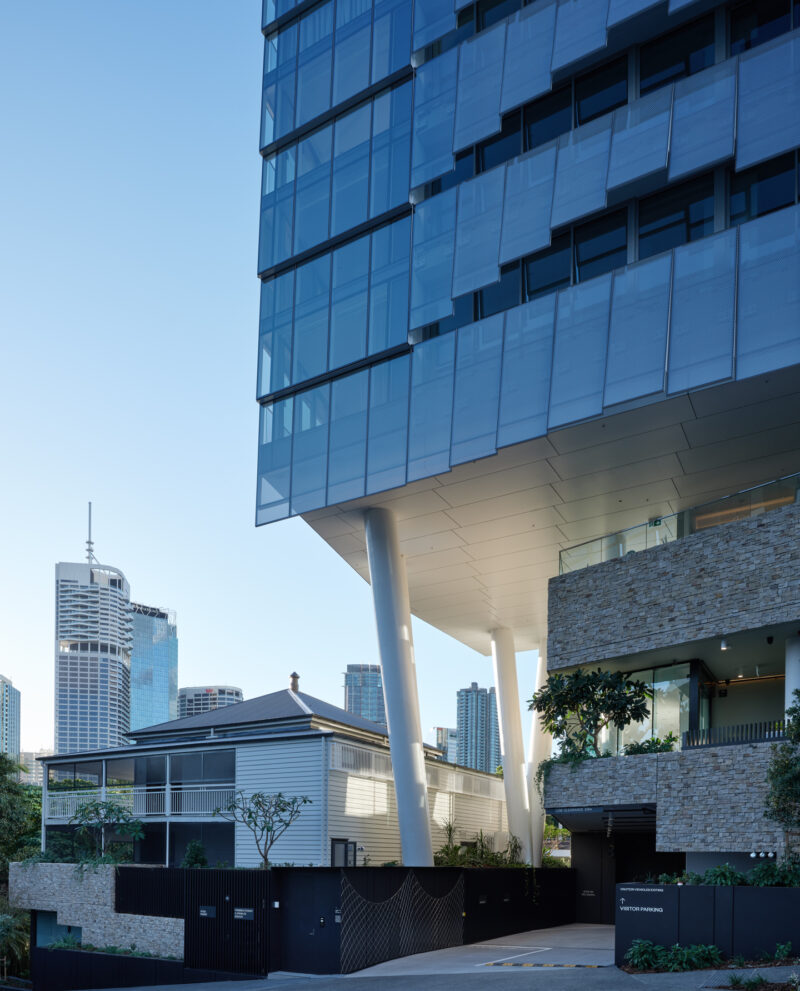
New developments, such as the Little Italy residential complex in Newstead, will create a vibrant high-rise community, transforming the streetscape into a source of social capital. The Thornton residential tower in Kangaroo Point demonstrates how to maintain harmony with surroundings, respecting the site’s heritage.

“We must present densification as a chance to create more vibrant communities, planning should enable rather than just regulate, and we all need to manage expectations by designing in partnership with the community.”
In conclusion, Monika posed the question: “Are our urban planning frameworks bold enough – and our communities engaged enough – to evolve alongside our cities?”